Walt — Simple Man Takeaway
A toggle can make a small hand force become a big machine force. That is useful until the pins, links, bracket, or fingers are in the wrong place.
Toggle Mechanisms — Plate 01
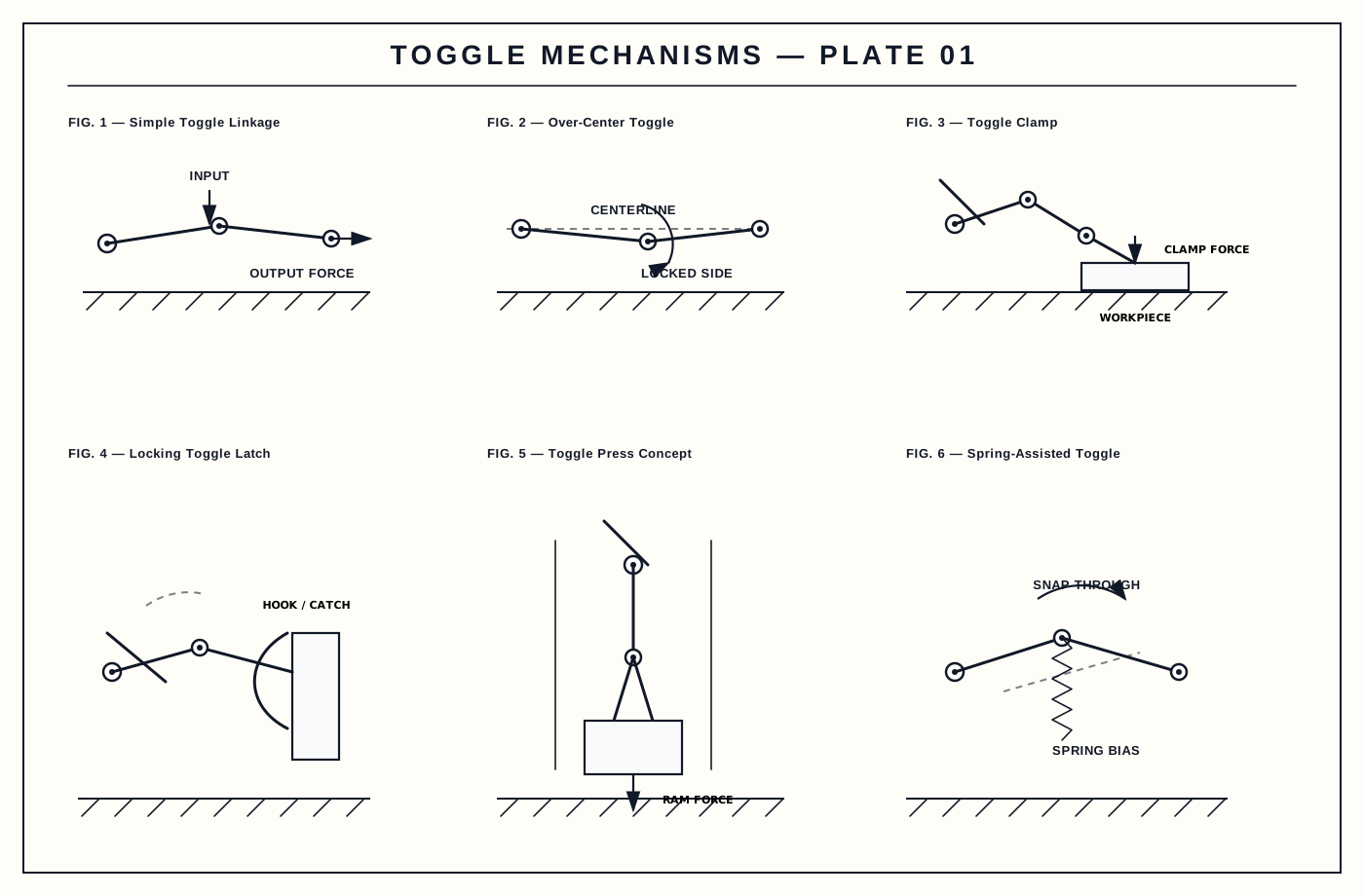
Original Dingfelder patent-style SVG line art. Motion concept drawing only; not a certified load-rated design.
As the links straighten, output force can increase dramatically.
A joint passing slightly beyond center can hold position after input force is removed.
A hand-operated toggle creates strong clamping force through linked arms.
An over-center link can hold a door, cover, guard, or panel closed when properly designed.
Toggle action can multiply force near the end of stroke for pressing or forming.
A spring can help a toggle snap into or out of position.
Motion Created
Toggle mechanisms create force multiplication, clamping action, over-center locking, snap-through motion, quick release, holding position, and mechanical advantage near straight-line geometry.
Common uses
- toggle clamps
- latches
- presses
- fixtures
- access covers
- machine hold-downs
- over-center locking devices
- guard doors when properly rated and designed
Advantages
- strong clamping force
- simple manual operation
- can lock without continuous power
- compact layout
- easy to inspect when visible
- fast open/close action
- useful for fixtures and changeover equipment
Limitations
- pinch and crush hazards
- pin wear changes locking behavior
- over-center geometry must be correct
- release under load can be sudden
- can overload parts near straight-line condition
- requires proper stops
- not every toggle latch is safety-rated
Common Wear / Failure Points
- worn pins
- elongated link holes
- bent handle
- cracked bracket
- worn clamp foot
- loose fasteners
- weak spring
- missing retainer
- poor over-center engagement
- stop damage
- inconsistent release
- difficulty locking
- excessive side play
Service and Build Notes
Over-Center Must Be Intentional
Too little over-center and the toggle may pop open. Too much over-center and it may be difficult or unsafe to release.
Pins Control the Geometry
Pin wear changes centerline behavior. A toggle that used to lock may stop locking when holes elongate.
Stops Matter
A stop controls final position. Without a proper stop, the linkage may overtravel, bend, jam, or create unsafe release behavior.
Do Not Confuse a Latch With a Safety Lock
A latch that holds a cover closed is not automatically a safety-rated locking device.
R.E.A.L. / Ghost Busting Questions
- Was there a point when the toggle locked correctly?
- When did it stop holding, releasing, or clamping correctly?
- What changed: load, adjustment, spring, bracket, pin, handle, or stop?
- Are the pins worn?
- Are holes elongated?
- Is the centerline relationship still correct?
- Is the bracket bending?
- Did someone adjust it to hide another problem?
Load Capability / Safety Factor Reminder
Toggle mechanisms can multiply force dramatically. The input force may feel small while the output load into the pins, links, bracket, clamp foot, welds, fasteners, and frame is high. Check the full load path, especially near the straight-line or over-center position. Equalize load-carrying capability and eliminate accidental weak links unless a sacrificial element is intentionally engineered to protect people or equipment.
Equalize load-carrying capability. Eliminate accidental weak links. Use sacrificial weak links only when they are deliberately engineered, easy to identify, safe when they operate, and protecting something more important.
- actual applied load and full load path
- material, pins, pivots, fasteners, welds, brackets, bearings, guides, and frame capacity
- fatigue, shock, acceleration, deceleration, inertia, and wear
- guarding, environment, release behavior, and required safety factor
- OEM, site, code, standard, or engineering requirements
Walt says STOP! - Safety First
Make these checks prior to proceeding.
Stop before adjusting, repairing, releasing, or modifying toggle mechanisms when the toggle is clamping or holding load; a spring can snap the mechanism through center; fingers can be pinched or crushed; the toggle controls a guard, latch, clamp, lift, brake, or press; release under load could move suddenly; or pins, links, welds, brackets, or stops are worn or cracked.
Stop before building, modifying, repairing, releasing, or using this mechanism under load unless the load path, material, pins, pivots, fasteners, welds, frame, guarding, fatigue, wear, environment, and required safety factor have been verified.
Patent & Prior-Art Notes
This mechanism family is long-established and should not be credited to a single patent unless a specific implementation, improvement, or application is being discussed. Patent research is pending for representative, improvement, application, and historical examples.
Final Sourcebook drawings are original Dingfelder drawings and are not copied patent plates. Status not verified. Verify against official patent records before relying on legal status.
Related Mechanisms
- Levers
- Four-Bar Linkages
- Detents, Latches & Catches
- Ratchets & Pawls
- Slider-Crank Mechanisms
- Screw, Wedge & Adjustment Devices
Related Field Handbook Pages
Page-Level Source Notes
This page is original Dingfelder practical field guidance. Mechanism principles are long-established mechanical concepts. Patent and prior-art references should be credited where used, but final drawings and explanations should remain original Dingfelder work. Mechanism design, guarding, load control, pinch-point protection, and safety-related applications should be verified by qualified engineering, safety, or maintenance authority where applicable.