Walt — Simple Man Takeaway
A spring is quiet until it is not. Treat stored energy like it is waiting for permission to move.
Springs & Stored-Energy Devices — Plate 01
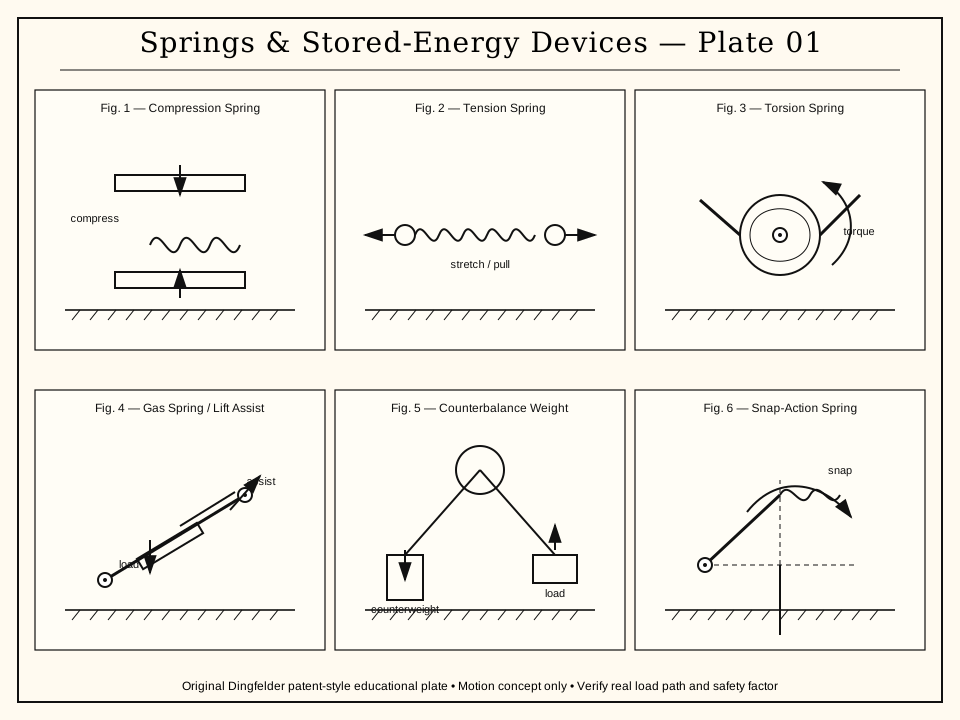
Original Dingfelder patent-style SVG line art. Motion concept drawing only; not a certified load-rated design.
Stores energy when squeezed and pushes back as it expands.
Stores energy when stretched and pulls parts back together.
Stores energy through twisting and applies rotary force.
Assists lifting or holds a cover, guard, or panel.
Reduces apparent effort needed to lift or move a load.
Makes a mechanism snap from one stable position to another.
Motion Created
Springs and stored-energy devices create return motion, holding force, tension, compression, torque, counterbalance, snap action, shock absorption, contact force, assisted lifting, and delayed release.
Common uses
- return mechanisms
- pressure application
- shock absorption
- detents and plungers
- lever and gate returns
- access covers
- counterbalanced doors
- snap-action latches and switches
Advantages
- simple stored energy
- compact force source
- works without electronics
- useful for returns and holds
- supports counterbalance and assist
- can absorb shock or vibration
Limitations
- fatigue failure
- force changes with travel
- corrosion can weaken springs
- springs can break suddenly
- stored energy can injure people
- gas springs can lose charge
- counterweights can move unexpectedly
Common Wear / Failure Points
- broken spring coils
- stretched spring
- weak return
- corrosion
- cracked hooks
- worn attachment points
- over-compressed coils
- missing retainers
- leaking gas spring
- counterweight cable wear
Service and Build Notes
Stored Energy Remains After Power Is Off
A machine can be electrically locked out and still have stored spring, gravity, air, hydraulic, or counterweight energy.
Replacement Springs Must Match Function
A spring that fits is not automatically correct. Force, travel, rate, material, end style, fatigue life, and environment matter.
Springs Need Safe Retention
If a spring breaks or unhooks, where will it go? Retainers, guides, shields, and safe attachment points matter.
Counterbalance Is Not Weightlessness
A counterbalanced load can still fall, drift, bounce, or move if the balance system fails.
Gas Springs Are Not Permanent Supports
Do not trust a gas spring alone to hold a guard, hatch, or cover where failure could injure someone.
R.E.A.L. / Ghost Busting Questions
- Was there a point when the return, assist, or snap action worked correctly?
- When did it get weak, slow, noisy, or unpredictable?
- What changed: spring, load, hinge, friction, temperature, corrosion, speed, or lubrication?
- Is the spring broken, stretched, corroded, or rubbing?
- Are attachment points worn?
- Is the spring being over-traveled?
- Did someone install a spring that fits but has the wrong force?
- Is stored energy still present after shutdown?
- Is a weak spring causing a cam follower, latch, or detent to misbehave?
Load Capability / Safety Factor Reminder
Springs and stored-energy devices must be checked for force, travel, fatigue, corrosion, temperature, attachment strength, containment, and safe release. The spring, hook, pin, bracket, fastener, frame, guard, and connected mechanism are all part of the load path.
Equalize load-carrying capability. Eliminate accidental weak links. Use sacrificial weak links only when they are deliberately engineered, easy to identify, safe when they operate, and protecting something more important.
- actual applied load and full load path
- material, pins, pivots, fasteners, welds, brackets, bearings, guides, and frame capacity
- fatigue, shock, acceleration, deceleration, inertia, and wear
- guarding, environment, release behavior, and required safety factor
- OEM, site, code, standard, or engineering requirements
Walt says STOP! - Safety First
Make these checks prior to proceeding.
Stop before adjusting, removing, replacing, or modifying springs and stored-energy devices when a spring is compressed, stretched, twisted, or pressurized; a gas spring is supporting a cover or guard; a counterweight, cable, or assisted lift is involved; or a load can fall, snap back, or move unexpectedly. Do not remove a spring until you know what it is holding, pulling, lifting, returning, or hiding.
Stop before building, modifying, repairing, releasing, or using this mechanism under load unless the load path, material, pins, pivots, fasteners, welds, frame, guarding, fatigue, wear, environment, and required safety factor have been verified.
Patent & Prior-Art Notes
This mechanism family is long-established and should not be credited to a single patent unless a specific implementation, improvement, or application is being discussed. Patent research is pending for representative, improvement, application, and historical examples.
Final Sourcebook drawings are original Dingfelder drawings and are not copied patent plates. Status not verified. Verify against official patent records before relying on legal status.
Related Mechanisms
- Toggle Mechanisms
- Cams & Followers
- Detents, Latches & Catches
- Levers
- Feed & Escapement Concepts
- Guides, Slides & Positioning Devices