Walt — Simple Man Takeaway
A crank does not just push a slider. It shoves load through a pin, a rod, a guide, and a frame. If any one of them is sloppy, dry, bent, or weak, the motion stops telling the truth.
Slider-Crank Mechanisms — Plate 01
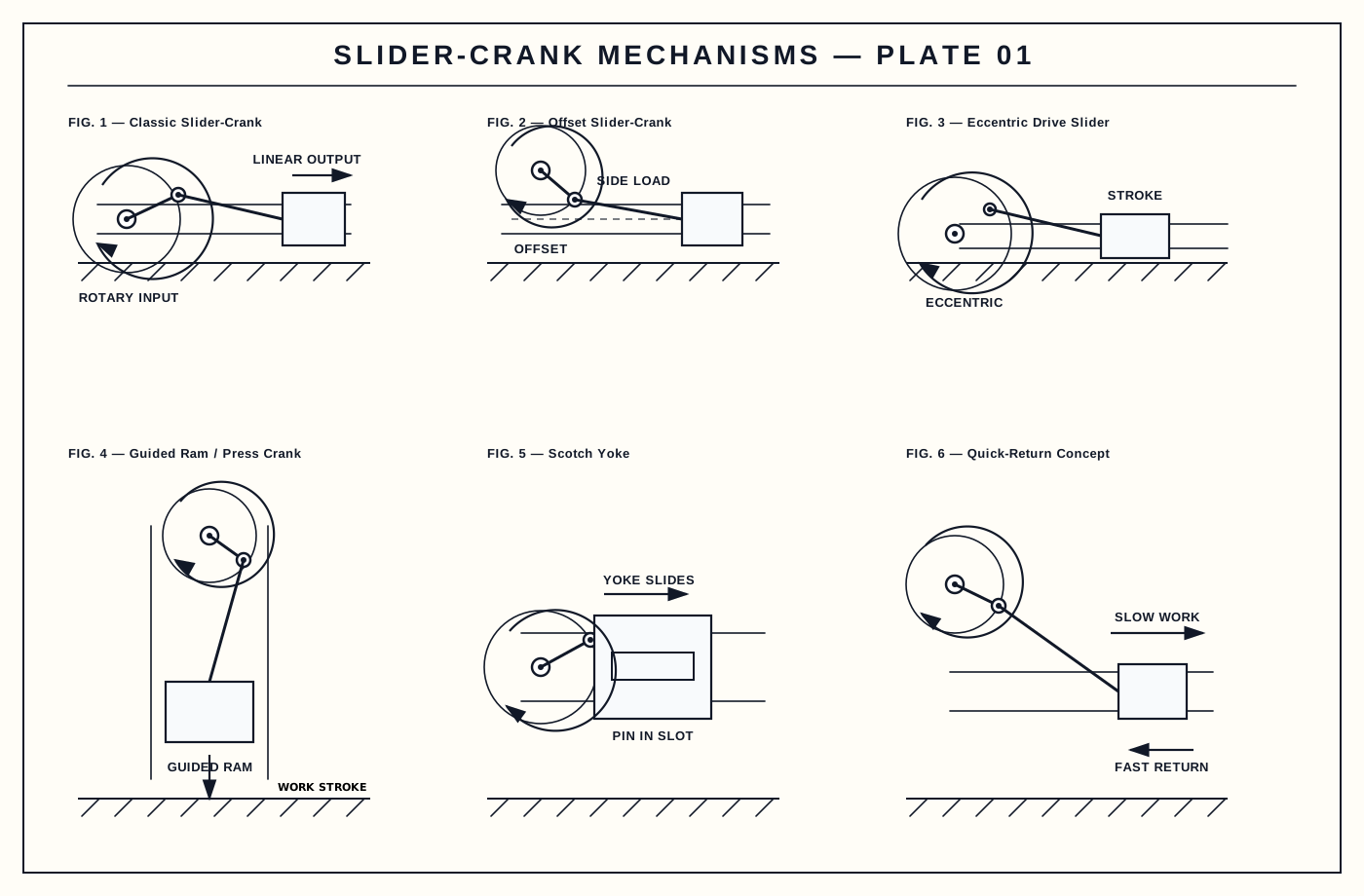
Original Dingfelder patent-style SVG line art. Motion concept drawing only; not a certified load-rated design.
Continuous rotation creates back-and-forth linear motion through a crank pin, connecting rod, and guided slider.
Offset geometry changes side loading, timing, force angle, and motion behavior.
An off-center disk can act like a compact crank for short-stroke reciprocating motion.
A crank drives a guided ram for pressing, punching, forming, or repetitive force application.
A crank pin moving in a slot turns rotation into linear reciprocating motion.
Some crank systems create a slower working stroke and a faster return stroke.
Motion Created
Slider-crank mechanisms create rotary-to-linear motion, linear-to-rotary motion, reciprocating stroke, push/pull action, timed forward and return motion, compact repeated motion, and high-force guided motion when properly designed.
Common uses
- engines
- pumps
- compressors
- presses
- feeders
- shuttles
- saws
- packaging equipment
- automated slides
Advantages
- simple rotary-to-linear conversion
- repeatable stroke
- easy to understand visually
- compact layouts possible
- high force possible when properly designed
- can be driven by motor, handwheel, flywheel, gear, or linkage
Limitations
- side loading on slider and guide
- crank pin wear
- rod-end wear
- changing speed through stroke
- pinch and crush hazards
- high inertia at speed
- possible binding if guides are misaligned
- load spikes near certain crank angles
Common Wear / Failure Points
- worn crank pin
- loose rod ends
- elongated rod holes
- dry guide rails
- worn slide ways
- bent connecting rod
- cracked ram or slider
- loose crank hub
- damaged key or coupling
- guide misalignment
- side-load wear marks
- knock or clunk at reversal
Service and Build Notes
Side Load Is Real
The slider may want to move sideways because the connecting rod angle changes through the stroke. Guides, bushings, rails, and wear strips must be able to handle the real side load.
Check Reversal Points
Crank mechanisms often show looseness at direction changes. A clunk at reversal may point to worn pins, rod ends, guides, or loose drive components.
Watch the Full Stroke
The mechanism may clear at mid-stroke and bind at either end. Cycle slowly and safely through the full travel.
Do Not Ignore Inertia
Acceleration and deceleration can create loads much higher than the static load, especially at speed.
R.E.A.L. / Ghost Busting Questions
- Was there a point when the mechanism ran smoothly?
- When did the knock, bind, heat, or bad stroke begin?
- What changed: speed, load, lubrication, product, guide adjustment, rod, bearing, or drive?
- Is the slider binding mechanically?
- Is the crank pin loose or worn?
- Is the connecting rod bent?
- Are the guides parallel and clean?
- Does the problem happen at one point in the stroke?
Load Capability / Safety Factor Reminder
A slider-crank can create high forces and high inertia loads. The crank pin, connecting rod, rod ends, slider, guide, fasteners, frame, and driven load are all part of the load path. Check full-stroke loading, acceleration, deceleration, shock, side load, fatigue, guarding, and required safety factor before use.
Equalize load-carrying capability. Eliminate accidental weak links. Use sacrificial weak links only when they are deliberately engineered, easy to identify, safe when they operate, and protecting something more important.
- actual applied load and full load path
- material, pins, pivots, fasteners, welds, brackets, bearings, guides, and frame capacity
- fatigue, shock, acceleration, deceleration, inertia, and wear
- guarding, environment, release behavior, and required safety factor
- OEM, site, code, standard, or engineering requirements
Walt says STOP! - Safety First
Make these checks prior to proceeding.
Stop before adjusting, repairing, cycling, or modifying slider-crank mechanisms when the slider or ram can crush, pinch, shear, or trap hands; a flywheel or motor can move the crank; inertia can carry the mechanism through a stroke; the mechanism is connected to a press, punch, saw, feeder, pump, or compressor; guards are open or removed; or the load path and safety factor are unknown.
Stop before building, modifying, repairing, releasing, or using this mechanism under load unless the load path, material, pins, pivots, fasteners, welds, frame, guarding, fatigue, wear, environment, and required safety factor have been verified.
Patent & Prior-Art Notes
This mechanism family is long-established and should not be credited to a single patent unless a specific implementation, improvement, or application is being discussed. Patent research is pending for representative, improvement, application, and historical examples.
Final Sourcebook drawings are original Dingfelder drawings and are not copied patent plates. Status not verified. Verify against official patent records before relying on legal status.
Related Mechanisms
- Four-Bar Linkages
- Levers
- Cams & Followers
- Toggle Mechanisms
- Feed & Escapement Concepts
- Screw, Wedge & Adjustment Devices
Related Field Handbook Pages
Page-Level Source Notes
This page is original Dingfelder practical field guidance. Mechanism principles are long-established mechanical concepts. Patent and prior-art references should be credited where used, but final drawings and explanations should remain original Dingfelder work. Mechanism design, guarding, load control, pinch-point protection, and safety-related applications should be verified by qualified engineering, safety, or maintenance authority where applicable.