Walt — Simple Man Takeaway
An adjustment screw is not a magic fix. If you keep turning it farther every week, the machine is telling you something else is moving, wearing, or bending.
Screw, Wedge & Adjustment Devices — Plate 01
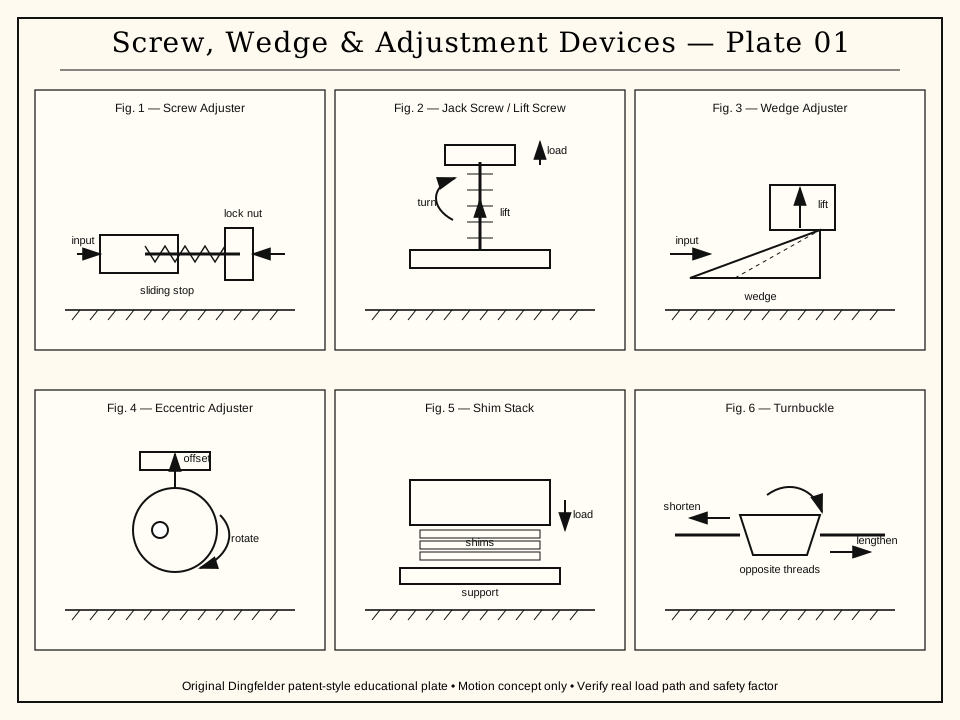
Original Dingfelder patent-style SVG line art. Motion concept drawing only; not a certified load-rated design.
A screw creates controlled linear adjustment and can be locked in place.
A screw can lift, support, or level a load when properly designed and rated.
A wedge turns sideways motion into lifting, spreading, clamping, or positioning force.
An eccentric changes position as it rotates, allowing compact adjustment.
Shims create controlled spacing or leveling by adding known thickness.
A turnbuckle changes link length or tension by rotating one body between opposite threads.
Motion Created
Screw, wedge, and adjustment devices create small controlled position change, clamping force, leveling, tensioning, alignment correction, height adjustment, controlled spacing, length adjustment, and repeatable setup stops.
Common uses
- stops
- sensor brackets
- guide rail adjustments
- machine leveling
- belt and chain tensioning
- motor and gearbox alignment
- fixture setup
- gate and door alignment
Advantages
- simple
- precise
- field-friendly
- repeatable when locked properly
- useful for setup and alignment
- supports controlled changeover
Limitations
- threads can strip or seize
- lock nuts can loosen
- shims can crush or slip
- wedges can back out
- eccentrics can rotate under vibration
- over-adjustment can hide a bigger problem
Common Wear / Failure Points
- stripped threads
- seized screws
- loose lock nuts
- crushed shims
- galling
- corrosion
- adjustment drift
- bent turnbuckle rods
- witness marks showing movement
- repeated need for readjustment
Service and Build Notes
Lock the Adjustment
An adjustment is not finished until it is locked, marked, or otherwise secured against vibration, drift, and accidental movement.
Record the Starting Position
Before adjusting, mark or measure the original position. Random adjustment can erase the clue.
Do Not Use Adjustment to Hide Wear
If an adjuster keeps needing more travel, find the wear, stretch, looseness, load change, or moving bracket behind the adjustment.
Threads Are Load Paths
If a screw carries load, thread engagement, material, lubrication, corrosion, side load, and locking method matter.
Shims Must Be Clean and Supported
Dirty, bent, partial, or poorly supported shims can create soft foot, misalignment, and future movement.
R.E.A.L. / Ghost Busting Questions
- Was there a point when the setup held position?
- When did it start drifting or needing readjustment?
- What changed: load, vibration, product, temperature, maintenance, cleaning, or wear?
- Did the lock nut loosen?
- Is the screw seized or stripped?
- Are shims crushed, dirty, partial, or missing?
- Is the adjuster correcting the symptom instead of the cause?
- Is the bracket bending under load?
- Does the same adjustment keep moving in the same direction?
Load Capability / Safety Factor Reminder
Adjustment devices often become part of the load path whether the designer intended it or not. The screw, threads, wedge, shim, lock nut, bracket, fastener, frame, and contact surfaces must all carry the real load safely. If an adjuster is also a support, verify it as a support.
Equalize load-carrying capability. Eliminate accidental weak links. Use sacrificial weak links only when they are deliberately engineered, easy to identify, safe when they operate, and protecting something more important.
- actual applied load and full load path
- material, pins, pivots, fasteners, welds, brackets, bearings, guides, and frame capacity
- fatigue, shock, acceleration, deceleration, inertia, and wear
- guarding, environment, release behavior, and required safety factor
- OEM, site, code, standard, or engineering requirements
Walt says STOP! - Safety First
Make these checks prior to proceeding.
Stop before adjusting, repairing, or modifying screw, wedge, or adjustment devices when the adjuster supports a load; the machine or part can drop, shift, pinch, or release; the adjustment affects alignment, guarding, brakes, clamps, belts, chains, or rotating equipment; or the screw, wedge, shim, bracket, or frame is cracked, bent, stripped, or loose. Do not stand under, beside, or inside the path of something supported only by an unverified adjuster.
Stop before building, modifying, repairing, releasing, or using this mechanism under load unless the load path, material, pins, pivots, fasteners, welds, frame, guarding, fatigue, wear, environment, and required safety factor have been verified.
Patent & Prior-Art Notes
This mechanism family is long-established and should not be credited to a single patent unless a specific implementation, improvement, or application is being discussed. Patent research is pending for representative, improvement, application, and historical examples.
Final Sourcebook drawings are original Dingfelder drawings and are not copied patent plates. Status not verified. Verify against official patent records before relying on legal status.
Related Mechanisms
- Levers
- Toggle Mechanisms
- Guides, Slides & Positioning Devices
- Detents, Latches & Catches
- Feed & Escapement Concepts
- Four-Bar Linkages