Walt — Simple Man Takeaway
A ratchet is only as safe as the tooth holding the load and the pawl sitting in it. If either one is worn, do not trust the click.
Ratchets & Pawls — Plate 01
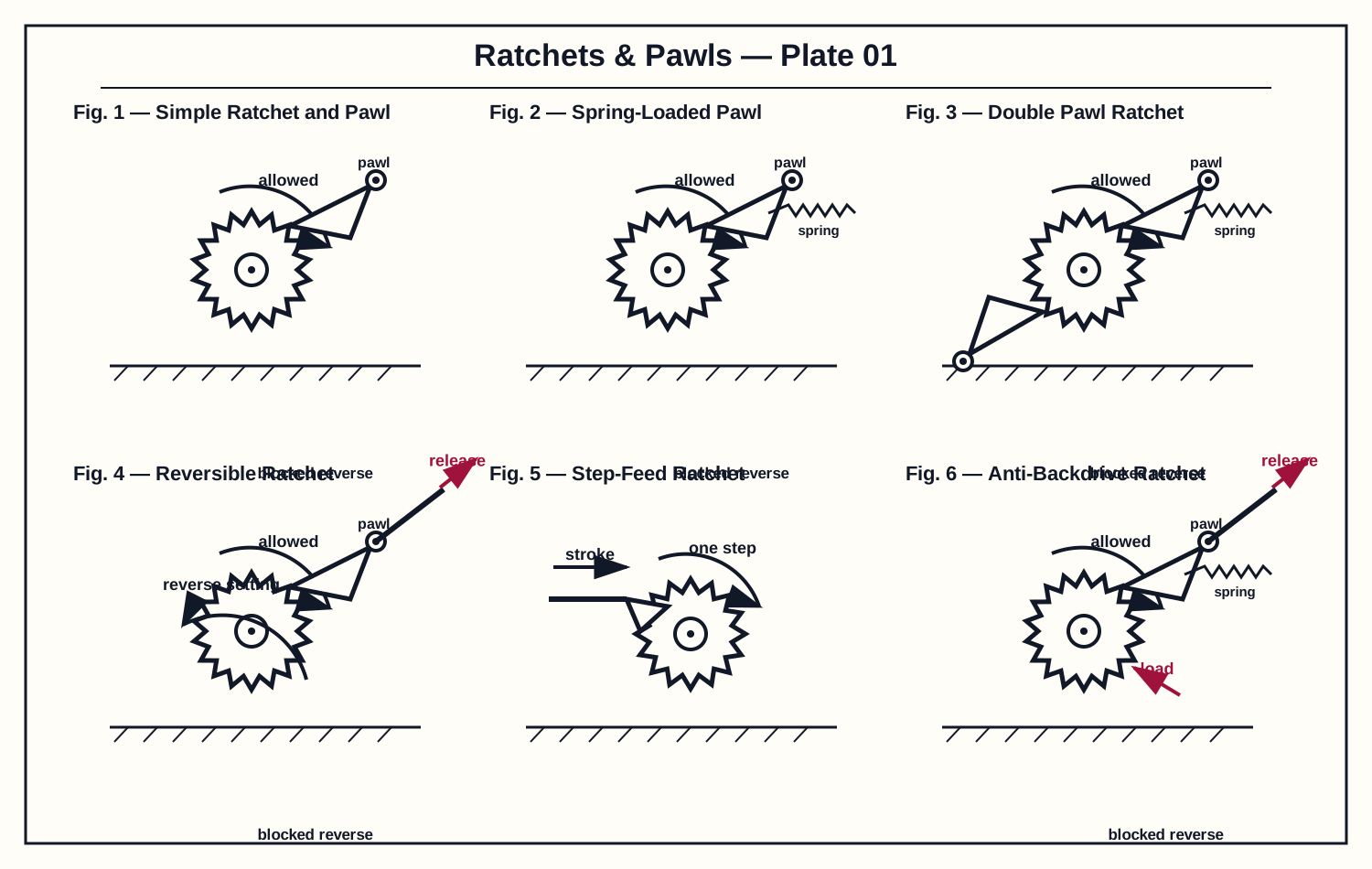
Original Dingfelder patent-style SVG line art. Motion concept drawing only; not a certified load-rated design.
The pawl allows rotation in one direction and blocks reverse motion.
A spring keeps the pawl engaged so it can catch the next tooth.
Two pawls improve holding reliability or reduce lost motion.
A selector changes which direction is allowed and which direction is blocked.
A reciprocating input advances the ratchet one step at a time.
The pawl holds against reverse load, but release must be controlled.
Motion Created
A ratchet and pawl mechanism allows motion in controlled steps or in one direction while resisting movement in the opposite direction. Together, they can hold a load, index a wheel, advance a feed, prevent backdrive, or create step-by-step motion.
Common uses
- hand winches
- indexing mechanisms
- feed mechanisms
- tensioners
- adjustment locks
- counters
- holding devices
- anti-backdrive systems
- ratchet tools
- packaging machinery
Common Wear / Failure Points
- rounded ratchet teeth
- chipped or cracked teeth
- worn pawl tip
- bent pawl
- weak or broken spring
- loose pawl pivot
- debris in tooth spaces
- poor tooth engagement
- pawl bounce
- uncontrolled reverse movement
Load Capability / Safety Factor Reminder
This mechanism drawing explains the motion concept. It does not prove that the part, linkage, tooth, pawl, pin, weld, bracket, frame, or fastener is strong enough for a real application.
A ratchet holding load depends on tooth shape, pawl engagement, pivot condition, spring force, material, shock loading, and controlled release. Do not treat a clicking sound as proof of safety. The tooth, pawl, pivot, spring, release method, shaft, hub, and mounting structure are all part of the load path.
Equalize the load path. Eliminate accidental weak links. If something is going to be the weak link, make sure it is weak on purpose, easy to identify, safe when it fails, and protecting something more important.
- actual applied load and full load path
- material, pins, pivots, fasteners, welds, brackets, and frame capacity
- fatigue, shock, acceleration, deceleration, inertia, and wear
- guarding, environment, release behavior, and required safety factor
- OEM, site, code, standard, or engineering requirements
R.E.A.L. / Ghost Busting Questions
- Was there a point when it worked correctly?
- When did it stop working correctly?
- What changed?
- Did a pivot, pin, spring, tooth, stop, bracket, or load condition change?
- Is the visible failure the cause, or only the part that complained first?
Walt says STOP! - Safety First
Make these checks prior to proceeding.
Stop before adjusting, repairing, releasing, or modifying ratchet and pawl mechanisms when the ratchet is holding a load, when spring force is present, when a pawl must be lifted to release the mechanism, or when teeth or pawl faces are worn, cracked, or chipped.
Stop before building, modifying, repairing, releasing, or using this mechanism under load unless the load path, material, pins, pivots, fasteners, welds, frame, guarding, fatigue, wear, environment, and required safety factor have been verified.
Patent & Prior-Art Notes
This mechanism family is long-established and should not be credited to a single patent unless a specific implementation, improvement, or application is being discussed. Patent research is pending for representative, improvement, application, and historical examples.
Final Sourcebook drawings are original Dingfelder drawings and are not copied patent plates. Status not verified. Verify against official patent records before relying on legal status.
Related Mechanisms
- Levers
- Feed & Escapement Concepts
- Detents, Latches & Catches
- Screw, Wedge & Adjustment Devices
Related Field Handbook Pages
Page-Level Source Notes
This page is original Dingfelder practical field guidance. Mechanism principles are long-established mechanical concepts. Patent and prior-art references should be credited where used, but final drawings and explanations should remain original Dingfelder work. Mechanism design, guarding, load control, pinch-point protection, and safety-related applications should be verified by qualified engineering, safety, or maintenance authority where applicable.