Walt — Simple Man Takeaway
A production machine is a conversation between mechanisms. When one starts talking late, loud, crooked, or not at all, the whole line hears it.
Packaging / Production Machine Mechanism Plates — Plate 01
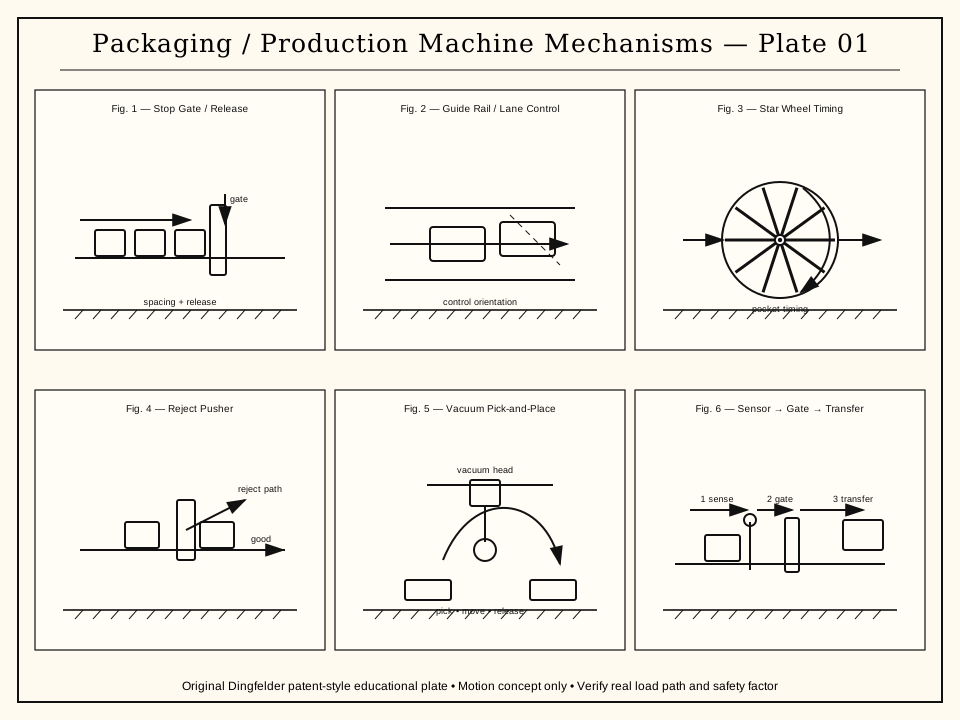
Original Dingfelder patent-style SVG line art. Motion concept drawing only; not a certified load-rated design.
A stop gate controls spacing and release timing.
Guides control product path and orientation before downstream mechanisms act.
A star wheel spaces and times product movement through a station.
A reject mechanism must fire at the right time and return before the next good product arrives.
A vacuum pick system depends on seal, timing, motion, release, and product surface.
Production mechanisms work as a timed chain; a late or false signal affects what follows.
Motion Created
Packaging and production mechanism plates explain product spacing, product guiding, stop-and-release motion, rejection/diversion, transfer timing, pick-and-place, rotary timing, sensor-to-motion relationships, line-flow control, and one-part-at-a-time control.
Common uses
- conveyor control
- product spacing
- accumulation release
- indexing into stations
- bottle handling
- carton lines
- reject systems
- vacuum transfer
- packaging lines
Advantages
- shows how smaller mechanisms combine
- useful for troubleshooting jams
- helps operators and mechanics see line flow
- connects sensors to mechanical action
- supports R.E.A.L. troubleshooting
- helps explain timing to mixed-discipline teams
Limitations
- product variation changes behavior
- mechanisms can blame each other
- timing is easy to disturb
- sensors may see wrong targets
- guides may shift
- gates may stick
- reject devices may fire late
- vacuum systems may lose grip
Common Wear / Failure Points
- guide rail movement
- worn gates
- sticky stops
- weak cylinders
- air leaks
- dirty sensors
- false sensor triggers
- vacuum cup wear
- reject timing drift
- star wheel pocket wear
- product buildup
- loose brackets
- repeated jam at same handoff
Service and Build Notes
Find the First Bad Movement
Do not only fix the pileup. Find where product first leaves the correct path, spacing, timing, or orientation.
Product Changes Matter
Material, shape, gloss, moisture, weight, stiffness, label position, packaging supplier, and surface finish can change behavior.
Sensors and Mechanisms Must Agree
A sensor may report correctly while the mechanism is late. A mechanism may move correctly while the sensor sees the wrong target.
Timing Is a Chain
When the sensor, gate, transfer, reject, or downstream station changes timing, every following event may shift.
R.E.A.L. / Ghost Busting Questions
- Was there a point when the line ran correctly?
- When did the jams, rejects, bad handoffs, or missed picks begin?
- What changed: product, supplier, speed, recipe, guide, sensor, gate, cylinder, vacuum cup, cleaning, or downstream machine?
- Where is the visible jam?
- Where is the first bad movement?
- Is the product arriving square, spaced, and stable?
- Is a gate, pusher, or transfer late?
- Did one adjustment create a new problem downstream?
Load Capability / Safety Factor Reminder
Packaging and production mechanisms cycle repeatedly and may see impact, jams, product pressure, actuator force, timing shock, vacuum loss, and unexpected backpressure. The gate, guide, pusher, star wheel, transfer, cup, clamp, sensor bracket, fastener, weld, frame, product, and downstream station are all part of the system load path.
Equalize load-carrying capability. Eliminate accidental weak links. Use sacrificial weak links only when they are deliberately engineered, easy to identify, safe when they operate, and protecting something more important.
- actual applied load, torque/force path, stopping energy, and full load path
- materials, pins, bearings, fasteners, guards, brackets, and frame capacity
- heat, wear, shock, acceleration, deceleration, inertia, and fatigue
- guarding, environment, release behavior, and required safety factor
- OEM, site, code, standard, or engineering requirements
Walt says STOP! - Safety First
Make these checks prior to proceeding.
Stop before adjusting, clearing, repairing, or modifying packaging and production mechanisms when product is jammed under pressure; gates, stops, pushers, transfers, clamps, star wheels, or conveyors can move; sensors or interlocks are being bypassed; hands can enter a nip, pinch, crush, shear, reject, transfer, or rotary path; the machine can restart automatically; or the load path and safety factor are unknown. The line does not know your hand is there.
Stop before building, modifying, repairing, releasing, or using this mechanism under load unless the load path, material, pins, pivots, fasteners, welds, frame, guarding, fatigue, wear, environment, and required safety factor have been verified.
Patent & Prior-Art Notes
These mechanism concepts are long-established. Patent references should be treated as representative, improvement, application, or historical examples unless a specific foundational claim is verified.
Final Sourcebook drawings are original Dingfelder drawings and are not copied patent plates. Status not verified. Verify against official patent records before relying on legal status.
Related Mechanisms
- Feed & Escapement Concepts
- Transfer Mechanisms
- Guides, Slides & Positioning Devices
- Detents, Latches & Catches
- Indexing Tables & Rotary Transfer Concepts
- Cams & Followers