Walt — Simple Man Takeaway
An indexing table is a promise that every station gets its turn in the right place. When the table drifts, every station starts blaming the next one.
Indexing Tables & Rotary Transfer Concepts — Plate 01
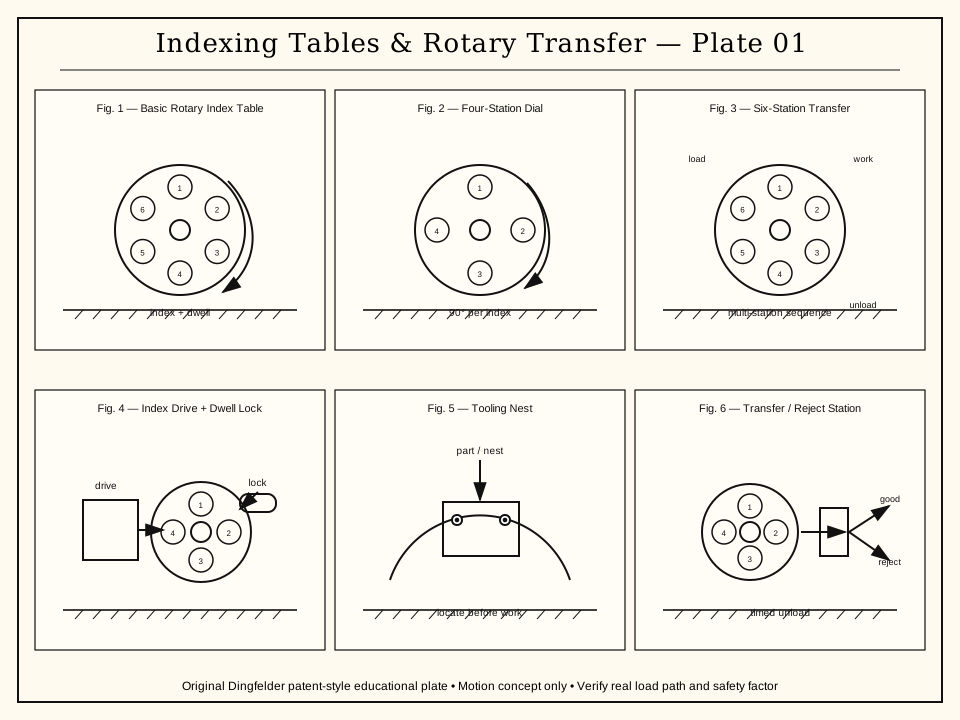
Original Dingfelder patent-style SVG line art. Motion concept drawing only; not a certified load-rated design.
A rotary table moves parts from station to station in a repeated sequence.
A four-station dial indexes one quarter turn per cycle.
More stations allow more operations but increase timing and alignment demands.
An index drive moves the table while a dwell lock holds position for work.
The table only moves the station; the nest must locate and hold the part correctly.
Rotary transfer depends on timed removal, release, or reject action at a station.
Motion Created
Indexing tables and rotary transfer systems create station-to-station movement, repeated index cycles, dwell periods, rotary positioning, multi-step processing, timed part presentation, controlled transfer, and load/work/unload sequencing.
Common uses
- assembly machines
- packaging dials
- inspection stations
- multi-step processing
- filling/capping concepts
- rotary transfer equipment
- reject stations
- pick-and-place handoff
Advantages
- compact multi-station layout
- repeated sequence
- dwell time supports work operations
- clear station organization
- combines mechanical, pneumatic, servo, and sensor systems
- useful for machine-that-builds-the-machine concepts
Limitations
- indexing loads can be high
- table inertia matters
- station drift affects every process
- tooling alignment is critical
- dwell locks must be reliable
- guarding is critical around rotating tables
- off-center loading affects bearing and drive loads
Common Wear / Failure Points
- station drift
- backlash
- loose table hub
- worn index drive
- worn dwell lock
- broken shot pin
- loose nests
- damaged locating pins
- table bearing wear
- sensor timing issues
- product stuck in a pocket
Service and Build Notes
The Table Is Only One Part of the System
The table may index correctly while the nests, clamps, sensors, or unload station cause the real problem.
Dwell Must Be Stable
If work happens during dwell, the station must stay where the tool expects it to be.
Center Bearing and Frame Matter
A rotary table may look like a flat plate, but the bearing, hub, shaft, frame, and base carry the real load.
Station Errors Travel
A bad load at Station 1 may become a bad press at Station 2, a bad inspection at Station 3, and a bad reject at Station 4.
Timing Includes Acceleration and Deceleration
The table must not only reach position. It must reach position smoothly enough for the product and tooling to survive.
R.E.A.L. / Ghost Busting Questions
- Was there a point when all stations were timed correctly?
- When did drift, jams, bad unloads, or station faults begin?
- What changed: speed, tooling, product, nest, drive, sensor, clamp, indexer, lubrication, or station load?
- Is the table stopping in the same place every time?
- Is the dwell lock engaging fully?
- Is the station tooling loose or shifted?
- Is the product arriving correctly into the nest?
- Is a downstream unload issue causing upstream pileup?
- Is the visible jam downstream from the first bad station?
Load Capability / Safety Factor Reminder
Indexing tables and rotary transfer systems must be checked for table inertia, off-center load, station tooling load, drive torque, stopping energy, dwell lock force, bearing capacity, frame stiffness, fatigue, wear, guarding, and required safety factor. The table, drive, hub, shaft, bearing, indexer, lock, nests, tooling, fasteners, frame, sensors, and transferred product are all part of the load path.
Equalize load-carrying capability. Eliminate accidental weak links. Use sacrificial weak links only when they are deliberately engineered, easy to identify, safe when they operate, and protecting something more important.
- actual applied load, torque path, stopping energy, and full load path
- materials, shafts, keys, bearings, fasteners, guards, brackets, and frame capacity
- heat, wear, shock, acceleration, deceleration, inertia, and fatigue
- guarding, environment, release behavior, and required safety factor
- OEM, site, code, standard, or engineering requirements
Walt says STOP! - Safety First
Make these checks prior to proceeding.
Stop before adjusting, clearing, repairing, or modifying indexing tables and rotary transfer systems when the table can move automatically; hands can enter a station, nest, pocket, clamp, pusher, or unload area; a dwell lock, shot pin, index drive, or brake is worn or not engaging; product is jammed in a station; sensors or interlocks are being bypassed; or multiple people are working around the dial. An indexing table can be stopped at one station and still be ready to move every station at once.
Stop before building, modifying, repairing, releasing, or using this mechanism under load unless the load path, material, pins, pivots, fasteners, welds, frame, guarding, fatigue, wear, environment, and required safety factor have been verified.
Patent & Prior-Art Notes
These mechanism concepts are long-established. Patent references should be treated as representative, improvement, application, or historical examples unless a specific foundational claim is verified.
Final Sourcebook drawings are original Dingfelder drawings and are not copied patent plates. Status not verified. Verify against official patent records before relying on legal status.
Related Mechanisms
- Geneva Mechanisms
- Cams & Followers
- Feed & Escapement Concepts
- Detents, Latches & Catches
- Clutches & Brakes
- Guides, Slides & Positioning Devices