Walt — Simple Man Takeaway
Power makes it move. Guides make it move where it is supposed to. If the guide lies, the whole machine follows the lie.
Guides, Slides & Positioning Devices — Plate 01
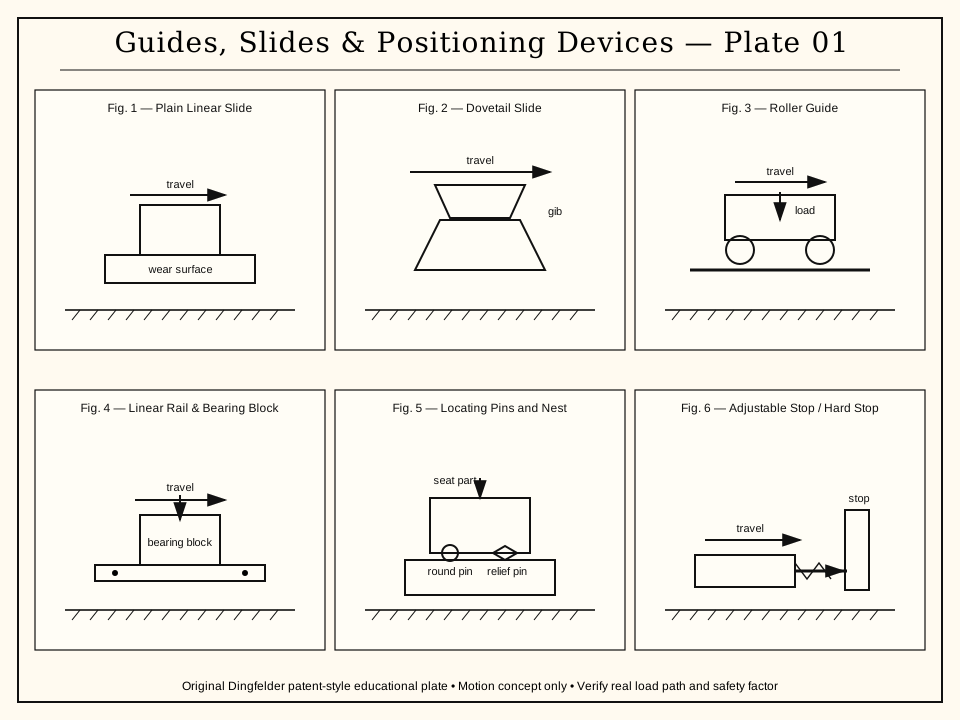
Original Dingfelder patent-style SVG line art. Motion concept drawing only; not a certified load-rated design.
A sliding block needs guided contact surfaces to control motion.
A dovetail guides motion while resisting lift-off and side movement.
Rollers reduce friction while guiding a moving carriage.
A rail and bearing block provide precise guided motion when properly mounted and protected.
Locating features define repeatable part position before clamping or processing.
A stop defines final position and must be strong enough for the real stopping load.
Motion Created
Guides, slides, and positioning devices create controlled linear motion, repeatable part location, travel limits, alignment, support, stop positions, reduced motion error, fixture repeatability, and guided actuation.
Common uses
- linear slides
- machine gates
- fixtures
- machine tool slides
- automation slides
- pick-and-place axes
- inspection nests
- product stops
Advantages
- makes motion repeatable
- improves alignment
- supports automation
- reduces uncontrolled movement
- helps fixtures hold parts correctly
- makes sensors and actuators see predictable targets
Limitations
- contamination can cause binding
- wear changes position
- poor mounting causes misalignment
- lack of lubrication causes stick-slip
- loose guides create chatter
- stops can mushroom or bend
- unsupported loads can twist slides
Common Wear / Failure Points
- scoring
- galling
- worn rails
- loose bearing blocks
- flat-spotted rollers
- dirt in guide ways
- dry slides
- stick-slip motion
- bent stops
- worn locating pins
- repeatability drift
- carriage rocking
Service and Build Notes
Guides Are Accuracy Parts
A guide may look like a simple rail, but it controls the path the machine trusts.
Stops See Impact
A stop is often treated like a location reference, but it may also see repeated impact. Check stop face, bracket, fasteners, frame, and shock load.
Locators Should Locate, Clamps Should Clamp
Do not make a locating pin do the job of a clamp. Locators define position; clamps hold the part there.
Dirt Changes Precision
Chips, dust, product, dried grease, corrosion, or washdown residue can change a slide from accurate to stubborn.
A Loose Guide Makes Good Sensors Look Bad
If the mechanical path moves, the sensor may only be reporting the truth.
R.E.A.L. / Ghost Busting Questions
- Was there a point when the motion or position was repeatable?
- When did binding, chatter, drift, or bad position begin?
- What changed: load, cleaning, lubrication, product, impact, sensor, stop, or guide adjustment?
- Is the guide dirty, dry, worn, or loose?
- Is the slide overloaded or side-loaded?
- Is the stop bent or moving?
- Are locators worn or damaged?
- Is a clamp pulling the part off the locator?
- Is the sensor blamed because the guided part no longer reaches the same position?
Load Capability / Safety Factor Reminder
Guides, slides, stops, locators, and positioning devices must be checked for actual load, side load, impact, fatigue, wear, contamination, mounting strength, and required safety factor. The guide, bearing, rail, stop, pin, nest, fastener, bracket, frame, actuator, and moving load are all part of the load path.
Equalize load-carrying capability. Eliminate accidental weak links. Use sacrificial weak links only when they are deliberately engineered, easy to identify, safe when they operate, and protecting something more important.
- actual applied load and full load path
- material, pins, pivots, fasteners, welds, brackets, bearings, guides, and frame capacity
- fatigue, shock, acceleration, deceleration, inertia, and wear
- guarding, environment, release behavior, and required safety factor
- OEM, site, code, standard, or engineering requirements
Walt says STOP! - Safety First
Make these checks prior to proceeding.
Stop before adjusting, repairing, clearing, or modifying guides, slides, stops, and positioning devices when a slide can move automatically; a load can fall, shift, or pinch; a stop is bent, cracked, loose, or mushroomed; a guide is binding under actuator force; fingers can enter the travel path; or the guide controls a safety-related position. A guided part is still a moving part.
Stop before building, modifying, repairing, releasing, or using this mechanism under load unless the load path, material, pins, pivots, fasteners, welds, frame, guarding, fatigue, wear, environment, and required safety factor have been verified.
Patent & Prior-Art Notes
This mechanism family is long-established and should not be credited to a single patent unless a specific implementation, improvement, or application is being discussed. Patent research is pending for representative, improvement, application, and historical examples.
Final Sourcebook drawings are original Dingfelder drawings and are not copied patent plates. Status not verified. Verify against official patent records before relying on legal status.
Related Mechanisms
- Screw, Wedge & Adjustment Devices
- Slider-Crank Mechanisms
- Four-Bar Linkages
- Feed & Escapement Concepts
- Detents, Latches & Catches
- Levers