Walt — Simple Man Takeaway
A Geneva drive is a polite shove followed by a forced wait. If the pin, slot, or dwell lock wears out, the timing stops being polite.
Geneva Mechanisms — Plate 01
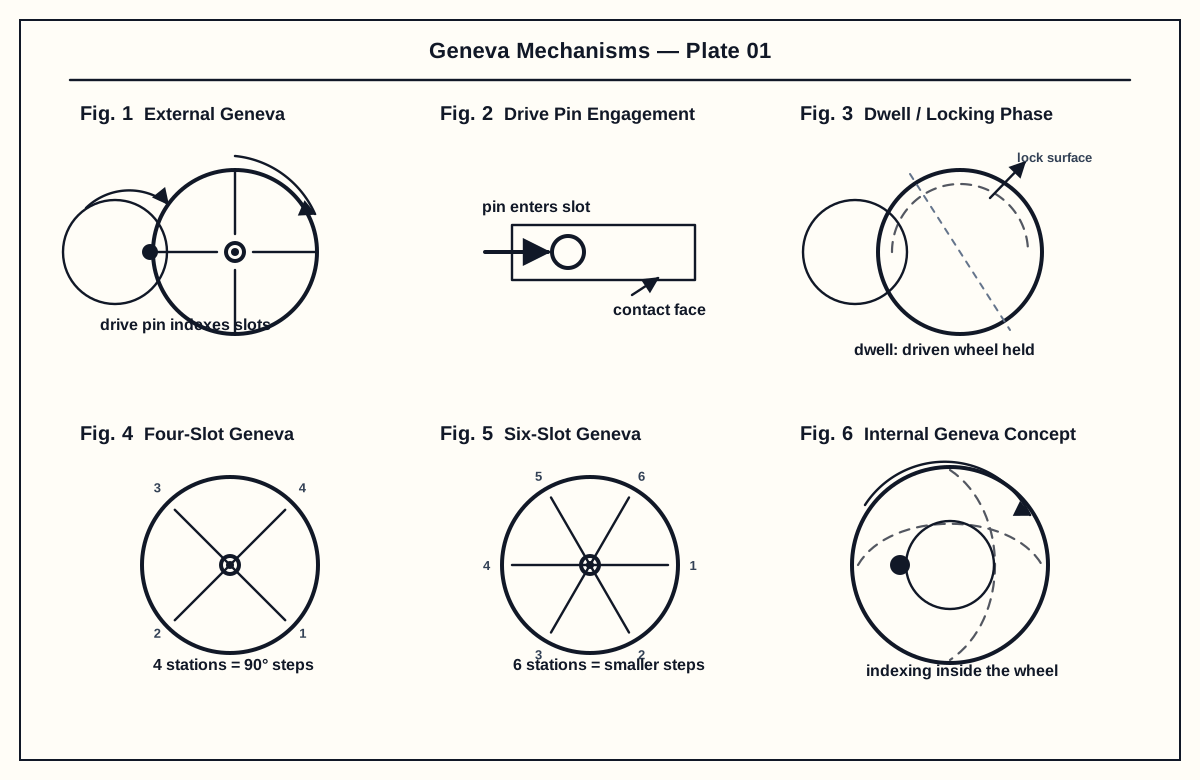
Original Dingfelder patent-style SVG line art. Motion concept drawing only; not a certified load-rated design.
Continuous rotation of the drive wheel creates intermittent indexed rotation of the driven wheel.
The drive pin enters a slot and pushes the driven wheel to the next indexed position.
The driven wheel remains stopped during dwell while lock geometry resists drift.
Four slots create four indexed positions and 90 degree steps.
More slots create more indexed positions and smaller step angles.
Geneva indexing can be arranged internally for compact or protected motion paths.
Motion Created
Geneva mechanisms create intermittent rotary motion, indexed position-to-position movement, dwell periods between moves, repeatable station timing, mechanical step motion, and controlled stop-and-go behavior.
Common uses
- indexing tables
- packaging dials
- rotary transfer concepts
- counting and indexing devices
- station-to-station machines
- timed loading and unloading
Advantages
- simple mechanical indexing
- clear dwell period
- repeatable station positions
- useful for rotary transfer concepts
- visually understandable
- no programming required for the basic index pattern
Limitations
- impact at engagement
- slot and pin wear
- limited speed compared with smoother motion systems
- acceleration and deceleration shock
- backlash or position error if worn
- requires accurate geometry
- not ideal for heavy shock loads without careful design
Common Wear / Failure Points
- worn drive pin
- elongated slots
- chipped slot edges
- cracked Geneva wheel
- dwell lock wear
- loose hub
- damaged key
- timing shift
- poor lubrication
- backlash at station
- impact marks at slot entry
- station drift
Service and Build Notes
The Slot Tells the Story
Slot wear changes timing and position accuracy. The driven wheel may still index, but it may not stop where it should.
Dwell Is Part of the Mechanism
The dwell period is not empty time. Another process may load, unload, inspect, clamp, or work on the part during dwell.
Engagement Shock Matters
The drive pin enters the slot and accelerates the load. Speed, inertia, lubrication, and load matter.
Count the Stations Before Changing Geometry
Slot count affects index angle. Changing the Geneva wheel changes machine timing and station positions.
R.E.A.L. / Ghost Busting Questions
- Was there a point when indexing was accurate?
- When did station drift, noise, or missed indexing begin?
- What changed: speed, load, lubrication, pin, wheel, hub, station tooling, or timing?
- Is the drive pin worn or loose?
- Are the slots elongated or chipped?
- Is dwell locking still positive?
- Did the hub slip on the shaft?
- Does the problem happen during engagement or during dwell?
Load Capability / Safety Factor Reminder
A Geneva drive can see high impact loads when the drive pin enters a slot and accelerates the driven wheel. The pin, slot, hub, shaft, key, bearings, frame, station tooling, and driven load are all part of the load path. Check engagement force, dwell holding, inertia, shock, wear, fatigue, guarding, and required safety factor before use.
Equalize load-carrying capability. Eliminate accidental weak links. Use sacrificial weak links only when they are deliberately engineered, easy to identify, safe when they operate, and protecting something more important.
- actual applied load and full load path
- material, pins, pivots, fasteners, welds, brackets, bearings, guides, and frame capacity
- fatigue, shock, acceleration, deceleration, inertia, and wear
- guarding, environment, release behavior, and required safety factor
- OEM, site, code, standard, or engineering requirements
Walt says STOP! - Safety First
Make these checks prior to proceeding.
Stop before adjusting, repairing, cycling, or modifying Geneva mechanisms when the mechanism indexes automatically; hands can enter the index path; the driven table, wheel, or station tooling can pinch or crush; the drive pin, slot, hub, shaft, or frame is worn or cracked; station position affects other machine motion; or the load path, dwell lock, and safety factor are unknown. Dwell is not permission to put hands in the machine.
Stop before building, modifying, repairing, releasing, or using this mechanism under load unless the load path, material, pins, pivots, fasteners, welds, frame, guarding, fatigue, wear, environment, and required safety factor have been verified.
Patent & Prior-Art Notes
This mechanism family is long-established and should not be credited to a single patent unless a specific implementation, improvement, or application is being discussed. Patent research is pending for representative, improvement, application, and historical examples.
Final Sourcebook drawings are original Dingfelder drawings and are not copied patent plates. Status not verified. Verify against official patent records before relying on legal status.
Related Mechanisms
- Cams & Followers
- Ratchets & Pawls
- Feed & Escapement Concepts
- Detents, Latches & Catches
- Slider-Crank Mechanisms
- Four-Bar Linkages