Walt — Simple Man Takeaway
Power transfer is not just about making something turn. It is about making the right thing turn the right way, at the right speed, without eating the parts between.
Gears, Belts, Chains & Power Transfer — Plate 01
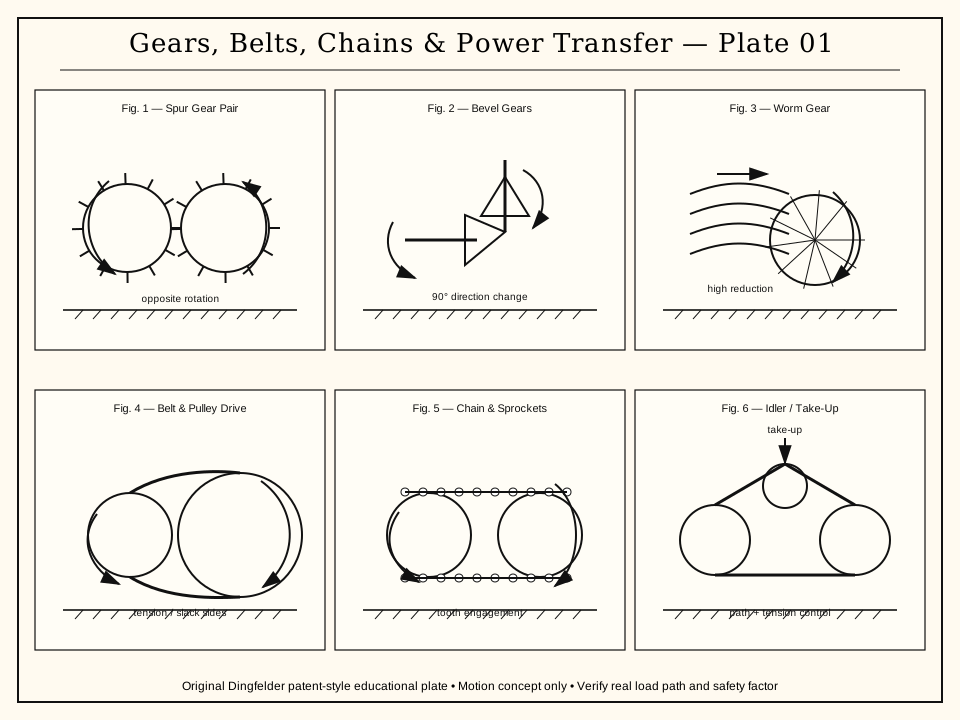
Original Dingfelder patent-style SVG line art. Motion concept drawing only; not a certified load-rated design.
Meshing gears transfer rotation and reverse direction between shafts.
Bevel gears transfer rotation between intersecting shafts.
A worm gear creates high speed reduction with special friction and backdrive considerations.
A belt transfers motion through friction or tooth engagement.
A chain transfers motion through links engaging sprocket teeth.
Idlers and take-ups control path, wrap, tension, and slack.
Motion Created
Power-transfer mechanisms create rotation transfer, speed increase or reduction, torque change, direction change, synchronized movement, shaft-to-shaft connection, conveyor motion, and timing relationships.
Common uses
- gearboxes
- timing mechanisms
- conveyors
- fans
- pumps
- machine drives
- right-angle drives
- reducers
- long-distance drives
Advantages
- reliable mechanical power transfer
- speed and torque changes possible
- direction changes possible
- long-distance transfer possible with belts or chains
- timing relationships possible
- visually diagnosable when accessible
Limitations
- guards required for pinch and wrap points
- alignment matters
- tension matters
- lubrication may be required
- wear changes timing and efficiency
- shock loads can damage teeth or links
- belts can slip
- chains can elongate
Common Wear / Failure Points
- hooked sprocket teeth
- elongated chain
- cracked belts
- glazed belts
- frayed belt edges
- worn pulley grooves
- loose set screws
- worn keys
- gear tooth pitting
- broken gear teeth
- take-up at end of travel
Service and Build Notes
Tension Is Not the Only Answer
A slipping belt or jumping chain may be worn, misaligned, contaminated, overloaded, or running on bad mating parts.
Replace Matched Wear Parts When Needed
A new chain on worn sprockets or a new belt on worn pulleys may fail quickly.
Ratios Change Machine Behavior
Changing pulley diameter, sprocket tooth count, or gear ratio can change speed, torque, timing, product spacing, and load.
Guards Are Part of the System
Power transfer creates nip, pinch, wrap, shear, and entanglement hazards.
Weak Links Must Be Intentional
A key, belt, chain, shear pin, fuse, or torque limiter may be intentionally sacrificial. Accidental weak links are hazards.
R.E.A.L. / Ghost Busting Questions
- Was there a point when the drive ran smoothly?
- When did noise, heat, slip, jump, dust, or timing trouble begin?
- What changed: belt, chain, gear, speed, product, load, tension, alignment, lubrication, or guard?
- Is tension too high or too low?
- Are mating parts worn?
- Is the drive misaligned?
- Is take-up near the end of travel?
- Did a ratio change alter machine timing?
- Is the driven load binding?
Load Capability / Safety Factor Reminder
Power-transfer systems must be checked for torque, speed, tension, shaft load, bearing load, tooth load, belt/chain capacity, shock load, lubrication, heat, guarding, and required safety factor. The driver, driven member, gear, belt, chain, sprocket, pulley, shaft, key, coupling, bearing, fastener, frame, guard, and load are all part of the load path.
Equalize load-carrying capability. Eliminate accidental weak links. Use sacrificial weak links only when they are deliberately engineered, easy to identify, safe when they operate, and protecting something more important.
- actual applied load, torque path, stopping energy, and full load path
- materials, shafts, keys, bearings, fasteners, guards, brackets, and frame capacity
- heat, wear, shock, acceleration, deceleration, inertia, and fatigue
- guarding, environment, release behavior, and required safety factor
- OEM, site, code, standard, or engineering requirements
Walt says STOP! - Safety First
Make these checks prior to proceeding.
Stop before adjusting, repairing, clearing, or modifying power-transfer systems when guards are missing; belts, chains, gears, pulleys, or sprockets can move; a person can be pulled into a nip, wrap, shear, crush, or entanglement point; stored energy is present; a chain or belt is under tension; or shafts, keys, hubs, or bearings are loose. Never clear or adjust a moving power-transfer system unless the procedure is specifically designed, authorized, and guarded for that task.
Stop before building, modifying, repairing, releasing, or using this mechanism under load unless the load path, material, pins, pivots, fasteners, welds, frame, guarding, fatigue, wear, environment, and required safety factor have been verified.
Patent & Prior-Art Notes
These mechanism concepts are long-established. Patent references should be treated as representative, improvement, application, or historical examples unless a specific foundational claim is verified.
Final Sourcebook drawings are original Dingfelder drawings and are not copied patent plates. Status not verified. Verify against official patent records before relying on legal status.
Related Mechanisms
- Clutches & Brakes
- Ratchets & Pawls
- Screw, Wedge & Adjustment Devices
- Indexing Tables & Rotary Transfer Concepts
- Guides, Slides & Positioning Devices
- Four-Bar Linkages