Walt — Simple Man Takeaway
The clamp is not the boss. The locator is. Clamp a bad location and all you did was hold the mistake still.
Fixtures, Nests & Workholding — Plate 01
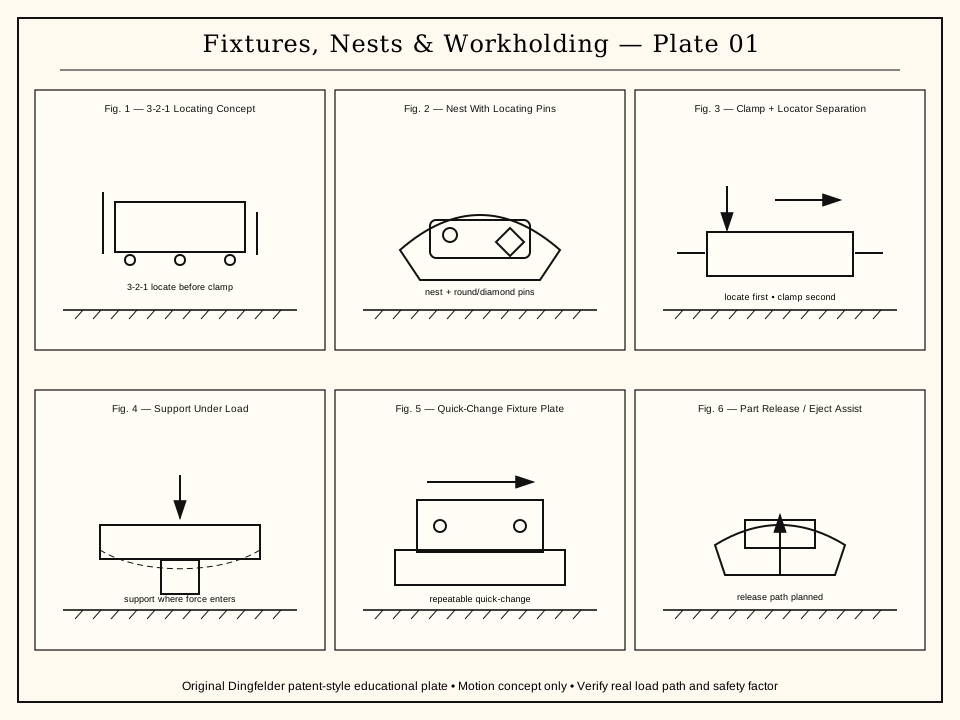
Original Dingfelder patent-style SVG line art. Motion concept drawing only; not a certified load-rated design.
Shows the core visual concept for this mechanism family.
Highlights the relationship between motion, support, and timing.
Explains where force, guidance, or control enters the system.
Shows a practical field variation and its important checks.
Shows how the concept changes in production or service use.
Connects the mechanism to safe operation and maintainability.
Function Created
repeatable part location, support under load, controlled clamping, datum reference, changeover repeatability, safer handling, inspection consistency, production stability, and predictable release.
Common uses
- fixtures
- inspection setups
- machining nests
- assembly tooling
- welding fixtures
- quick-change production tooling
- pick-and-place presentation
Advantages
- repeatable positioning
- better part quality
- faster setup
- easier inspection
- supports automation
- reduces operator variability
- improves safety when designed correctly
- makes process problems easier to see
Limitations
- poor locators create repeated bad parts
- overclamping distorts parts
- underclamping allows movement
- chips or product buildup changes position
- wear changes repeatability
- thermal growth matters in some fixtures
- release can jam if not planned
Common Wear / Failure Points
- worn locating pins
- damaged nest surfaces
- loose dowels
- clamp pad wear
- part witness marks
- chips or debris under part
- bent supports
- cracked fixture plate
- loose quick-change plate
- clamp dragging part sideways
- release/eject sticking
- datum surfaces worn or damaged
Service and Build Notes
Locate Before Clamp
A clamp should hold a part already in position. It should not be the feature that drags the part into position.
Support the Work Where Force Enters
If drilling, pressing, welding, or assembling creates load, support the part where that load enters or reacts.
Keep Datum Surfaces Clean
A small chip under a datum can become a large quality problem.
Plan Release
A good fixture also lets the part leave. Stuck parts cause pry marks, bent tooling, and unsafe shortcuts.
R.E.A.L. / Ghost Busting Questions
- Was there a point when the fixture produced repeatable parts?
- When did bad location, part damage, or release trouble begin?
- What changed: part supplier, clamp pad, locator, debris, process force, operator, or changeover plate?
- Is the part located before clamping?
- Is the clamp pushing the part off a locator?
- Is debris under the part?
- Are datum surfaces worn or damaged?
- Is the part distorting under clamp force?
- Is the release path clear?
Load Capability / Safety Factor Reminder
Fixtures, nests, and workholding devices must be checked for workpiece load, process force, clamp force, part distortion, locator strength, support strength, fastener capacity, weld capacity, fatigue, wear, guarding, and required safety factor.
Equalize load-carrying capability. Eliminate accidental weak links. Use sacrificial weak links only when they are deliberately engineered, easy to identify, safe when they operate, and protecting something more important.
- actual applied load, force path, stopping energy, and full load path
- materials, fasteners, welds, guards, brackets, and frame capacity
- wear, shock, acceleration, deceleration, inertia, and fatigue
- guarding, environment, release behavior, and required safety factor
- OEM, site, code, standard, or engineering requirements
Walt says STOP! - Safety First
Make these checks prior to proceeding.
Stop before adjusting, repairing, loading, unloading, or modifying fixtures and workholding when the part is heavy, sharp, hot, unstable, or under force; clamps, ejectors, or locators can move automatically; a part can drop, tip, spring, or eject; or hands enter a clamp, nest, eject, or process area.
Stop before building, modifying, repairing, releasing, or using this mechanism under load unless the load path, material, pins, pivots, fasteners, welds, frame, guarding, fatigue, wear, environment, and required safety factor have been verified.
Patent & Prior-Art Notes
These mechanism concepts are long-established and may combine many older principles. Patent references should be treated as representative, improvement, application, or historical examples unless a specific foundational claim is verified.
Final Sourcebook drawings are original Dingfelder drawings and are not copied patent plates. Status not verified. Verify against official patent records before relying on legal status.
Related Mechanisms
- Clamping Mechanism Plates
- Guides, Slides & Positioning Devices
- Screw, Wedge & Adjustment Devices
- Transfer Mechanisms
- Detents, Latches & Catches
- Packaging / Production Machine Mechanism Plates