Walt — Simple Man Takeaway
A good feed mechanism does not fight the pileup. It prevents the pileup by controlling the first part in line.
Feed & Escapement Concepts — Plate 01
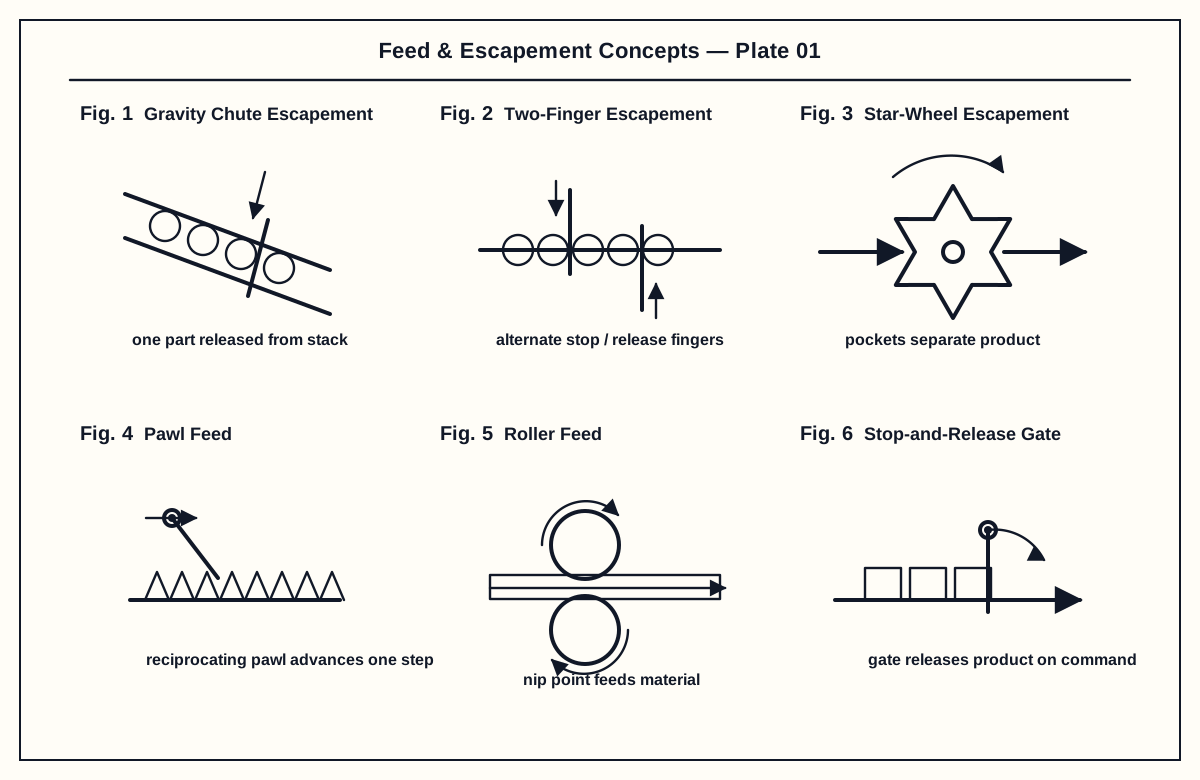
Original Dingfelder patent-style SVG line art. Motion concept drawing only; not a certified load-rated design.
A chute escapement releases one part while holding back the next parts.
Two fingers separate and release one part while controlling the stack behind it.
A star wheel separates, spaces, and controls product as it moves through a line.
A reciprocating pawl advances material or a mechanism one step at a time.
Driven rollers feed material continuously or intermittently by gripping it at the nip.
A gate holds product until a signal, timing event, or mechanical sequence releases it.
Motion Created
Feed and escapement mechanisms create one-at-a-time release, product separation, part metering, controlled flow, step advance, stop-and-release behavior, spacing and timing, anti-jam control, and index feeding.
Common uses
- packaging lines
- part feeders
- conveyors
- chutes
- pick-and-place systems
- indexing devices
- counting devices
- automated production equipment
Advantages
- controls product flow
- separates parts
- creates timing
- reduces pileups
- supports automation
- can be mechanical, pneumatic, electrical, or combined
- helps one downstream action happen at the right time
Limitations
- sensitive to product variation
- can jam from burrs, labels, moisture, dust, or damage
- timing can drift
- sensors may misread product position
- air pressure or cylinder speed can change release behavior
- wear changes stop and release position
- poor adjustment can create doubles, misses, or jams
Common Wear / Failure Points
- worn stop fingers
- bent gates
- loose pivot pins
- sticky slides
- broken springs
- weak cylinders
- air leaks
- worn rollers
- poor grip
- product buildup
- star-wheel pocket wear
- sensor misalignment
- bad release timing
- guide rail movement
- doubles or missed feeds
Service and Build Notes
Control the First Part
The visible pileup may be downstream, but the feed problem often starts with the first part that was not separated, stopped, or released correctly.
Product Variation Matters
A small change in size, stiffness, surface finish, label, moisture, weight, or supplier can change how a feed mechanism behaves.
Timing Must Match Motion
The gate, finger, cylinder, roller, or star wheel must release at the right time for product speed and spacing.
Do Not Add Force Before Understanding the Jam
More air pressure, spring force, roller pressure, or speed may damage product and hide the real cause.
R.E.A.L. / Ghost Busting Questions
- Was there a point when the feed worked correctly?
- When did doubles, misses, jams, or bad spacing begin?
- What changed: product, speed, air pressure, sensor, guide, cleaning, supplier, timing, or tooling?
- Is the first part being controlled correctly?
- Are parts sticking together?
- Is a stop finger worn or bent?
- Is the release late or early?
- Is the downstream machine causing backup that looks like a feed problem?
Load Capability / Safety Factor Reminder
Feed and escapement mechanisms may see repeated cycling, impact, product pressure, jams, cylinder force, roller nip force, and shock loads. The gate, finger, roller, star wheel, pawl, spring, cylinder, pivot, fastener, bracket, frame, and product path are all part of the load path.
Equalize load-carrying capability. Eliminate accidental weak links. Use sacrificial weak links only when they are deliberately engineered, easy to identify, safe when they operate, and protecting something more important.
- actual applied load and full load path
- material, pins, pivots, fasteners, welds, brackets, bearings, guides, and frame capacity
- fatigue, shock, acceleration, deceleration, inertia, and wear
- guarding, environment, release behavior, and required safety factor
- OEM, site, code, standard, or engineering requirements
Walt says STOP! - Safety First
Make these checks prior to proceeding.
Stop before adjusting, clearing, repairing, or modifying feed and escapement mechanisms when product is jammed under pressure; fingers, gates, rollers, or star wheels can move automatically; air cylinders, springs, or gravity can release stored energy; nip, pinch, shear, crush, or entanglement points are present; sensors or interlocks are being bypassed; or the mechanism is part of a high-speed line.
Stop before building, modifying, repairing, releasing, or using this mechanism under load unless the load path, material, pins, pivots, fasteners, welds, frame, guarding, fatigue, wear, environment, and required safety factor have been verified.
Patent & Prior-Art Notes
This mechanism family is long-established and should not be credited to a single patent unless a specific implementation, improvement, or application is being discussed. Patent research is pending for representative, improvement, application, and historical examples.
Final Sourcebook drawings are original Dingfelder drawings and are not copied patent plates. Status not verified. Verify against official patent records before relying on legal status.
Related Mechanisms
- Ratchets & Pawls
- Geneva Mechanisms
- Cams & Followers
- Detents, Latches & Catches
- Slider-Crank Mechanisms
- Four-Bar Linkages