Walt — Simple Man Takeaway
A latch that “usually holds” is not a latch. It is a warning with moving parts.
Detents, Latches & Catches — Plate 01
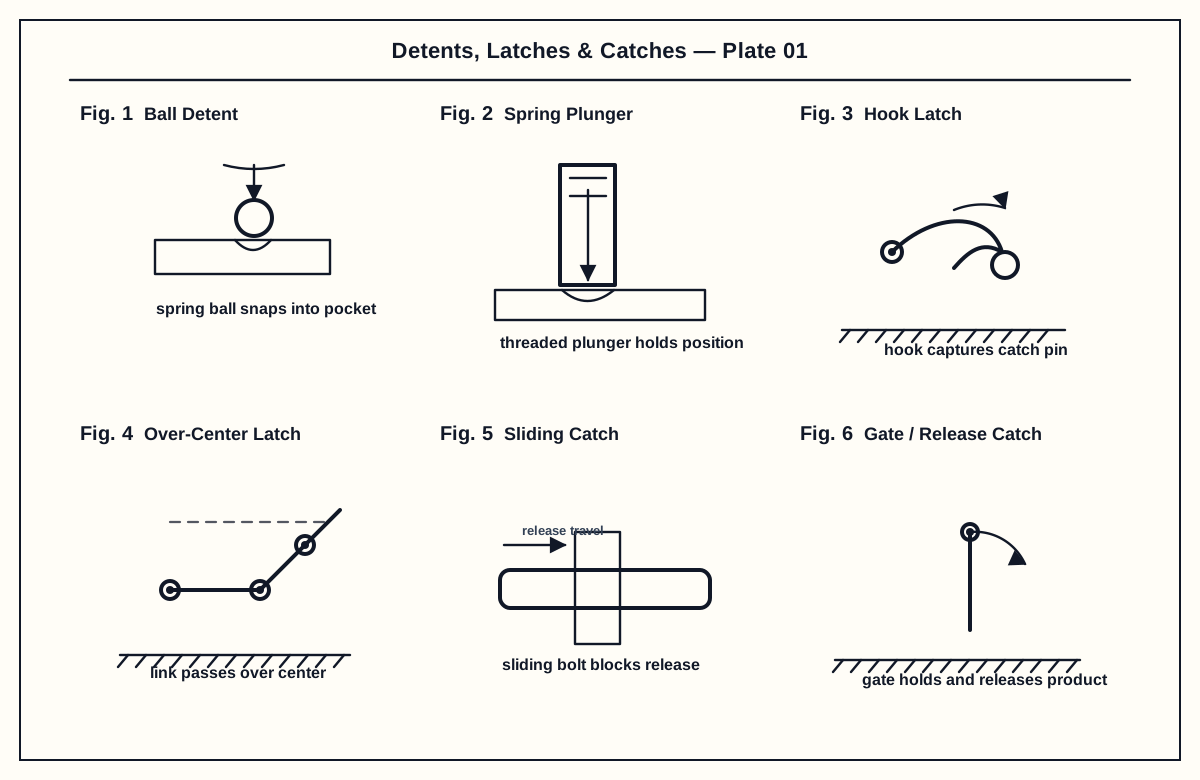
Original Dingfelder patent-style SVG line art. Motion concept drawing only; not a certified load-rated design.
A spring-loaded ball creates a repeatable position or tactile stop.
A threaded spring plunger holds or locates a part while still allowing intentional movement.
A hook captures a pin or catch point to hold a door, cover, or part.
Over-center geometry can hold a latch closed until intentionally released.
A sliding catch holds a part by moving a blocking element into position.
A catch can hold a gate or product stop until a release action allows motion.
Motion Created
Detents, latches, and catches create position holding, snap-in feel, controlled release, door and cover retention, gate holding, part capture, indexing feedback, changeover positioning, and manual or automatic locking.
Common uses
- guards and covers
- fixtures
- gates
- indexing devices
- access panels
- changeover hardware
- product-handling equipment
- adjustment positions
Advantages
- simple position holding
- easy to understand visually
- useful for changeover
- gives tactile or visual confirmation
- can be manual or automatic
- can combine with sensors, springs, and interlocks
Limitations
- spring wear
- latch misalignment
- wear at catch surfaces
- accidental release risk
- not automatically safety-rated
- contamination can prevent engagement
- vibration can loosen poor designs
- false sense of security if not inspected
Common Wear / Failure Points
- weak or broken spring
- worn ball or plunger tip
- rounded notch
- bent hook
- worn catch pin
- loose pivot
- sticky release
- debris in pocket
- misaligned latch and catch
- cracked bracket
- missing retainer
- latch not fully seated
Service and Build Notes
Engagement Must Be Real
A latch that looks closed may not be fully engaged. Check actual contact, depth, alignment, and load direction.
Not Every Latch Is a Safety Device
A latch may hold a panel closed during normal operation but may not be rated for guarding, trapped key, lockout, load holding, or safety interlocking.
Springs Are Part of the Mechanism
A weak spring can turn a good latch into an unreliable latch. Spring condition matters.
Contamination Changes Behavior
Dust, chips, product, grease, corrosion, paint, or bent parts can stop a detent from seating or a catch from releasing.
R.E.A.L. / Ghost Busting Questions
- Was there a point when the latch or detent held correctly?
- When did it start popping open, sticking, or missing position?
- What changed: spring, alignment, product, vibration, cleaning, bracket, wear, or load direction?
- Is the latch fully seated?
- Is the catch pin worn?
- Is the notch rounded?
- Is debris preventing engagement?
- Is someone using a non-safety latch as if it were a safety lock?
Load Capability / Safety Factor Reminder
A detent, latch, or catch may hold position, but that does not make it load-rated or safety-rated. The hook, ball, plunger, spring, notch, catch pin, pivot, bracket, fasteners, welds, frame, and release method are all part of the load path.
Equalize load-carrying capability. Eliminate accidental weak links. Use sacrificial weak links only when they are deliberately engineered, easy to identify, safe when they operate, and protecting something more important.
- actual applied load and full load path
- material, pins, pivots, fasteners, welds, brackets, bearings, guides, and frame capacity
- fatigue, shock, acceleration, deceleration, inertia, and wear
- guarding, environment, release behavior, and required safety factor
- OEM, site, code, standard, or engineering requirements
Walt says STOP! - Safety First
Make these checks prior to proceeding.
Stop before adjusting, repairing, releasing, or modifying detents, latches, and catches when the latch is holding a guard, cover, gate, or load; release can cause sudden movement; springs are loaded; fingers can be pinched, crushed, or trapped; the device is part of an interlock, safety system, or access control; or the load path and safety factor are unknown.
Stop before building, modifying, repairing, releasing, or using this mechanism under load unless the load path, material, pins, pivots, fasteners, welds, frame, guarding, fatigue, wear, environment, and required safety factor have been verified.
Patent & Prior-Art Notes
This mechanism family is long-established and should not be credited to a single patent unless a specific implementation, improvement, or application is being discussed. Patent research is pending for representative, improvement, application, and historical examples.
Final Sourcebook drawings are original Dingfelder drawings and are not copied patent plates. Status not verified. Verify against official patent records before relying on legal status.
Related Mechanisms
- Toggle Mechanisms
- Ratchets & Pawls
- Feed & Escapement Concepts
- Levers
- Cams & Followers
- Screw, Wedge & Adjustment Devices