Walt — Simple Man Takeaway
A clutch that slips and a brake that grabs are both telling you something. One is losing hold, the other is losing control.
Clutches & Brakes — Plate 01
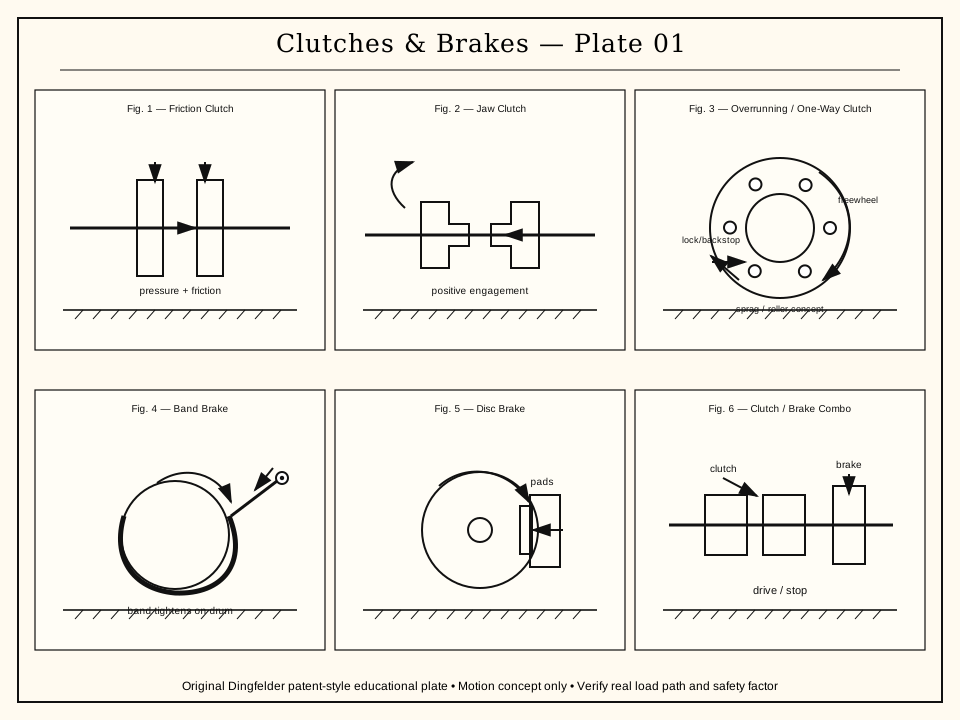
Original Dingfelder patent-style SVG line art. Motion concept drawing only; not a certified load-rated design.
Friction surfaces transfer torque when pressed together.
Interlocking teeth or jaws transfer torque by positive engagement.
Freewheels in one direction and locks, drives, or backstops in the other.
A band tightens around a drum to create braking friction.
Pads squeeze a disc to slow, stop, or hold rotation.
Some systems combine drive engagement and stopping or holding in one controlled assembly.
Motion Created
Clutches and brakes create torque transfer, start/stop action, holding position, controlled slip, overload protection in some designs, one-way drive, overrunning/freewheel behavior, backstop/anti-reverse behavior, indexing control, stopping rotation, preventing backdrive, and machine cycle timing.
Common uses
- machine drives
- conveyors
- indexing systems
- winches
- vehicles
- packaging equipment
- presses
- feed mechanisms
- rotating assemblies
- backstop and anti-reverse systems
Advantages
- controlled power transfer
- start and stop machine sections
- holding and anti-backdrive capability when properly designed
- overload or slip behavior in some designs
- overrunning/freewheel behavior
- useful for indexing and cyclic machines
- isolates drive sections
Limitations
- heat generation
- friction surface wear
- glazing or contamination
- adjustment drift
- spring fatigue
- release failure
- overrunning clutch failure to lock
- unexpected lockup when freewheel is expected
- not every brake or backstop is safety-rated
Common Wear / Failure Points
- slipping clutch
- overrunning clutch failing to lock
- overrunning clutch locking when it should freewheel
- backstop not holding reverse load
- rough or delayed engagement
- grabbing brake
- dragging clutch
- worn friction lining
- glazed surface
- oil or grease contamination
- cracked drum or disc
- weak spring
- inconsistent stopping position
Service and Build Notes
Heat Is Part of the Job
Clutches and brakes convert energy. When friction is involved, heat is part of the system.
Slip Can Be a Feature or a Failure
Some clutches are designed to slip. Others should not. Know which one you have before judging the symptom.
Overrunning Must Be Understood
An overrunning clutch can let one member run ahead or freewheel in the allowed direction, then lock when torque reverses or the driven member tries to backdrive the system. Sprag and roller-style overrunning clutches are common examples.
Holding Is Not the Same as Stopping
A brake or backstop that can hold a stopped load may not be designed to stop a moving load repeatedly.
Clean Friction Surfaces Matter
Oil, grease, water, dust, product, or cleaning chemicals can change friction behavior and engagement.
R.E.A.L. / Ghost Busting Questions
- Was there a point when the clutch or brake behaved correctly?
- When did slipping, grabbing, heat, chatter, lockup, or drift begin?
- What changed: load, speed, duty cycle, adjustment, contamination, friction surface, sprag/roller condition, spring, air pressure, hydraulic pressure, or control timing?
- Is the device designed to slip or not?
- Is the brake holding, stopping, or both?
- If it is an overrunning clutch, is it supposed to freewheel, drive, or backstop in this condition?
- Is the overrunning clutch failing to lock or locking when it should freewheel?
- Is oil, grease, water, dust, or product on the surface?
- Is stopping position changing because the brake is late or weak?
Load Capability / Safety Factor Reminder
Clutches and brakes must be checked for torque, overrunning/freewheel behavior, backstop load, stopping energy, heat, friction surface condition, sprag/roller condition, spring force, actuation force, duty cycle, wear, and holding requirements. The clutch/brake element, shaft, key, hub, bearing, linkage, actuator, fasteners, frame, guard, and driven load are all part of the load path.
Equalize load-carrying capability. Eliminate accidental weak links. Use sacrificial weak links only when they are deliberately engineered, easy to identify, safe when they operate, and protecting something more important.
- actual applied load, torque/force path, stopping energy, and full load path
- materials, pins, bearings, fasteners, guards, brackets, and frame capacity
- heat, wear, shock, acceleration, deceleration, inertia, and fatigue
- guarding, environment, release behavior, and required safety factor
- OEM, site, code, standard, or engineering requirements
Walt says STOP! - Safety First
Make these checks prior to proceeding.
Stop before adjusting, repairing, cycling, or modifying clutches and brakes when the brake is holding a load; the clutch can engage unexpectedly; rotating parts can start suddenly; an overrunning clutch may lock unexpectedly or fail to hold reverse load; stored energy is present; guards are open; friction surfaces are overheated, cracked, contaminated, or worn; or the device may be part of a safety function. Do not trust an overrunning clutch as a backstop unless the load path, direction, rating, inspection condition, and failure consequence are understood.
Stop before building, modifying, repairing, releasing, or using this mechanism under load unless the load path, material, pins, pivots, fasteners, welds, frame, guarding, fatigue, wear, environment, and required safety factor have been verified.
Patent & Prior-Art Notes
These mechanism concepts are long-established. Patent references should be treated as representative, improvement, application, or historical examples unless a specific foundational claim is verified.
Final Sourcebook drawings are original Dingfelder drawings and are not copied patent plates. Status not verified. Verify against official patent records before relying on legal status.
Related Mechanisms
- Ratchets & Pawls
- Detents, Latches & Catches
- Gears, Belts, Chains & Power Transfer
- Indexing Tables & Rotary Transfer Concepts
- Cams & Followers
- Screw, Wedge & Adjustment Devices